
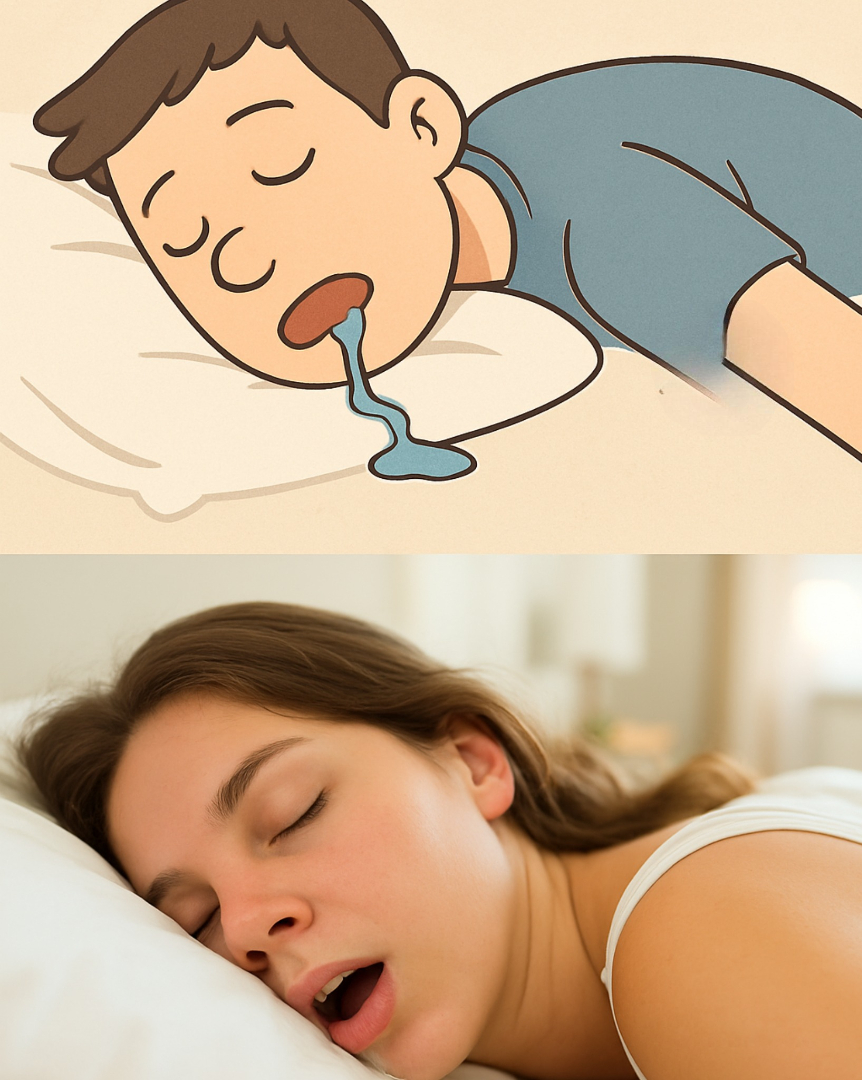
5. 😵 Medical conditions
In some cases, drooling may be linked to:
- nerve-related conditions
- difficulty swallowing
- other health issues
(These are less common but may require medical attention.)
⚠️ Is drooling during sleep dangerous?
Usually ❌ No
It’s harmless if it happens occasionally.
However, you should pay attention if:
- it happens every night heavily
- it’s getting worse
- you have trouble breathing or swallowing
In these cases, it’s best to consult a doctor.
✅ How to reduce drooling
Here are simple and effective tips:
🛏️ 1. Change your sleeping position
Try sleeping on your back to prevent saliva from escaping.
🧼 2. Improve oral hygiene
- Brush your teeth regularly
- Use mouthwash
🌬️ 3. Treat nasal blockage
Fixing allergies or congestion helps you breathe through your nose.
💧 4. Stay hydrated
Drinking enough water helps regulate saliva production.
😮💨 5. Keep your mouth closed
Try to train yourself to keep your mouth closed while sleeping (or seek medical advice if needed).
💡 Conclusion
Drooling during sleep is:
- very common 👍
- usually harmless
- often related to sleep position or breathing
With a few simple changes, you can reduce or even stop it.
Pages: 1 2
