
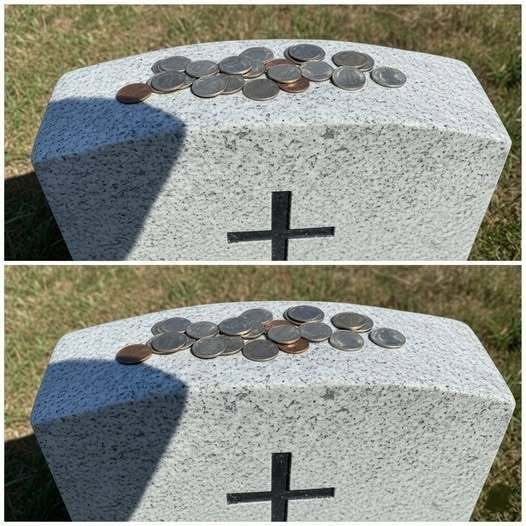
If you’ve ever strolled through a cemetery on a quiet morning or at sunset, you may have noticed a small glint of metal resting atop a gravestone. At first glance, it looks like someone simply left loose change behind—a penny, a nickel, a dime, maybe even a quarter. But these small coins are far from random. Each carries a meaning that goes beyond its face value. They are messages of remembrance, tokens of respect, and silent promises that the person buried beneath that stone has not been forgotten.
The tradition of leaving coins on the graves of fallen soldiers has become an enduring custom in the United States, passed along quietly through generations of veterans and their loved ones. It may seem like a small gesture, but in the world of military service, where loyalty and sacrifice define lives, a coin is more than currency—it is a language of remembrance. Every denomination tells a different story, a way of marking the relationship between the visitor and the deceased. Together, they form a code of grief, honor, and unspoken solidarity.
Why coins, though? Flowers fade. Notes can blow away in the wind. Trinkets may not withstand the weather. But coins endure. They are simple, sturdy, universal, and recognizable. Anyone who passes by knows that a coin left on a gravestone isn’t there by accident. It’s deliberate. And once you understand what each coin means, every small piece of metal takes on a weight far heavier than its size.
The penny is perhaps the most common coin left behind. On its own, it carries the most straightforward message: someone was here. A penny says, “You are remembered. Your life mattered.” It might not seem like much, but to a grieving parent, child, or sibling, that small copper coin can mean the world. It confirms that strangers, comrades, or friends continue to carry the memory of their loved one. It whispers that even years after the burial, their sacrifice still resonates.
A nickel carries more significance. It means the person who left it trained with the fallen soldier, often during boot camp. Anyone who has gone through that experience knows that it forges unbreakable bonds. Grueling mornings, relentless drills, and the shared struggle to endure transform strangers into brothers and sisters-in-arms. Leaving a nickel is like saying, “We started this journey side by side, and I still carry those memories with me.”
A dime goes a step further. It tells the family and the world that the visitor served directly alongside the deceased. They may have stood shoulder to shoulder in combat, shared long nights during deployment, or protected each other in moments of danger. A dime is intimate. It says, “I was there with you. I fought beside you. I carry the same scars, and I will never forget.”

