
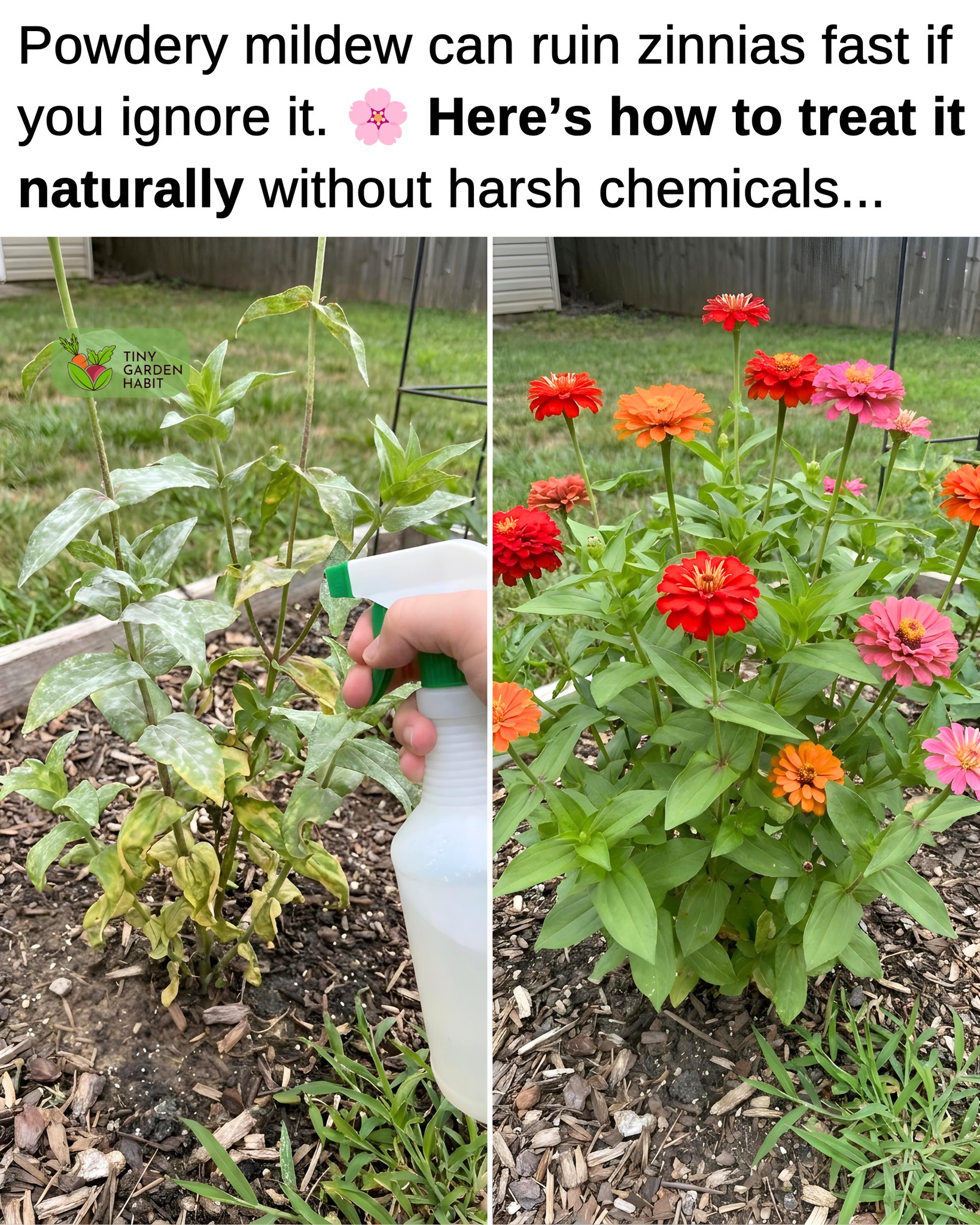
Powdery mildew is a common issue for zinnia growers, especially in the initial days of planting.
While there are popular ways to combat the issue, most of them require the use of store-bought fungicides that are full of harmful chemicals. Even though the fungicides do work pretty well, they can often end up harming the annual in the long run.

In today’s article, let’s go over some legit ways to treat powdery mildew on zinnias without the use of chemicals. Like always, all these solutions are tried and tested beforehand to ensure a good mix of anecdotal and theoretical evidence.
What Powdery Mildew Looks Like On Your Plants

If you’re unsure of what to look for when trying to spot powdery mildew, some quick visual cues can help.
Plan your best garden yet! This printable 2026 Sowing Calendar tells you exactly when to plant your favorite vegetables, herbs, and flowers for a thriving garden all year long.
We use your personal data for interest-based advertising, as outlined in our Privacy Notice.
You’re looking for some sort of unusual white or greyish powder that may be coating the flowers and plant foliage.
Oftentimes, this powder goes unnoticed because it’s on the backside of leaves, so make sure to flip every single leaf over and inspect carefully.
Catching mildew early is key. And if you’re aiming for the fullest blooms possible, these simple tips can help you maximize flowering on your zinnias.
It’s Usually Just Cosmetic…But Can Reduce Blooms!

While powdery mildew is a fungal infection, it rarely kills plants. More often than not, you’ll find the powder to be purely cosmetic, but that doesn’t mean it’s not causing harm behind the scenes.
Powdery mildew can actually weaken the blooming potential of your zinnias and cause them to take on a paler, more dull appearance. Early spotting of this fungal disease ensures long-term health and blooming of your zinnias.
And if your zinnias are looking a bit dull, it might not just be disease, here’s how to feed them properly for stronger growth and vibrant color.
Prevention Is The Key! Let’s Start…

5 Organic Treatments That Actually Work

1: Milk Spray
Continued on next page:
